
 Login To Net Banking
Our Commitment to ESG
At Fino Payments Bank, we have embedded Environmental, Social, and Governance (ESG) principles into our operations to drive sustainable growth and financial inclusion.
As a digital-first, asset-light bank, we minimize our environmental footprint by reducing physical infrastructure and promoting paperless transactions.
Our social impact is rooted in bridging the financial gap for unbanked and underserved communities, empowering them through essential financial services and CSR initiatives in education, healthcare, skill development, and environmental protection.
Strong governance is the foundation of our ethical, transparent, and accountable operations. Guided by a robust ESG framework and industry best practices, we ensure responsible decision-making that creates long-term value for all stakeholders.
ESG is not just a commitment it’s the way we shape a more inclusive and sustainable future.

ESG Strategy Pillars
We follow a ‘SCALE’ Strategy which stands for:



Secure Data Systems

Champion Climate Action

Advance Governance
Our Approach
Our ESG framework is built on a comprehensive and structured approach to ensure that our environmental, social, and governance commitments are effectively integrated into our business operations. Our strategy is defined by three key steps: Foundation Building, Planning and Goal Setting, and Implementation and Reporting. Each of these steps are crucial to drive long-term impact and create value for our stakeholders.
Foundation Building
Establishing ESG Governance
Planning and Goal Setting Materiality Assessment
Materiality Assessment ESG Roadmap
Implementation and Reporting
Monitor KPIs External Reporting
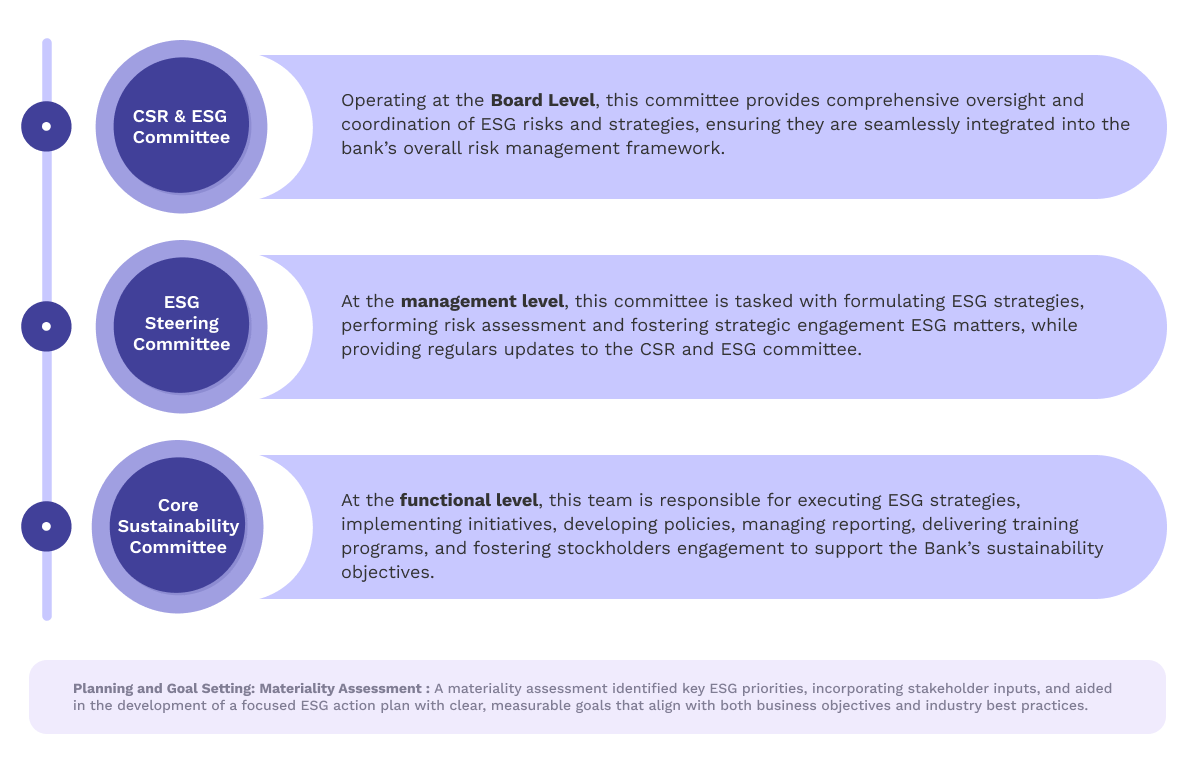
ESG Governance Structure
The ESG governance structure assigns each governing body with distinct and well-defined roles:
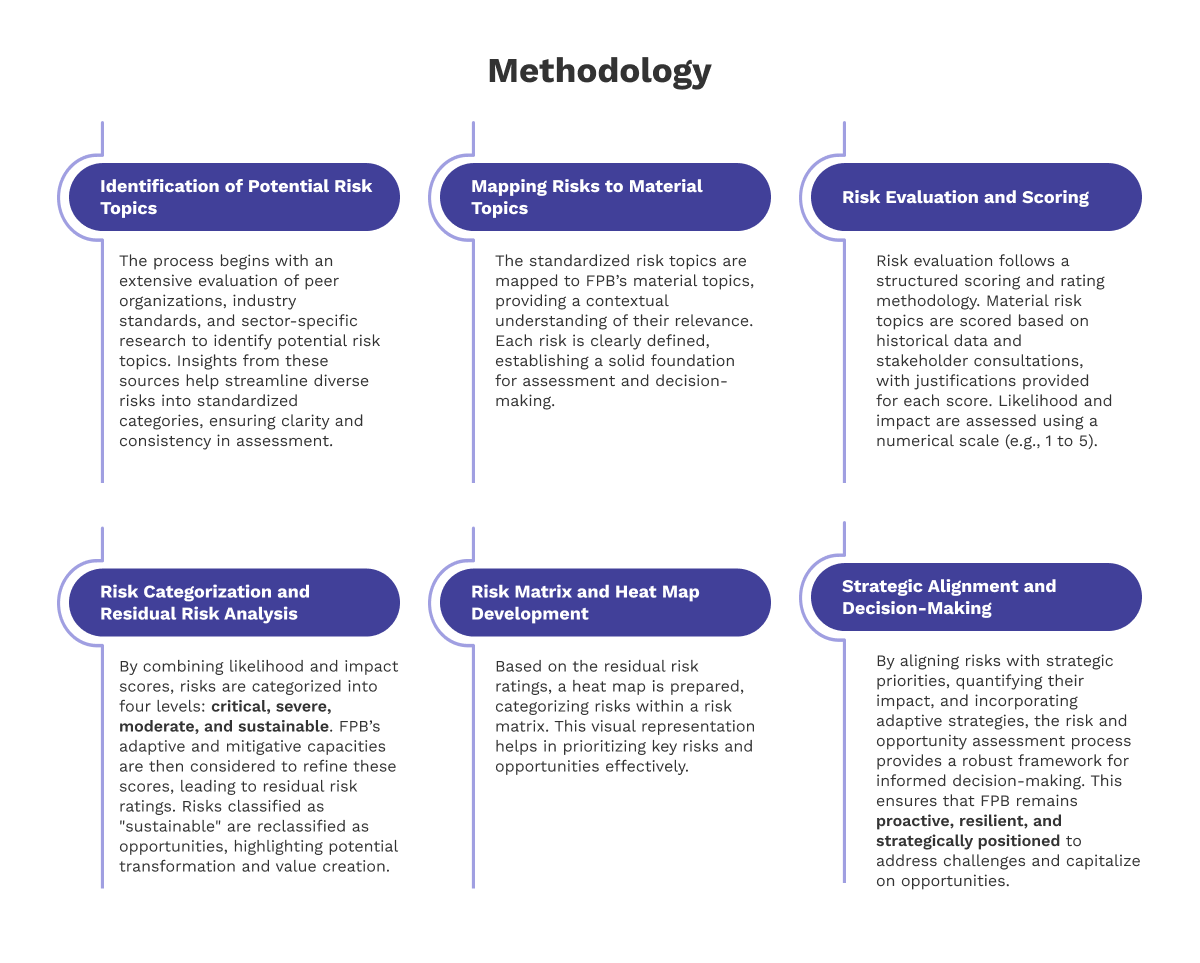
Risk & Opportunity Assessment
The Risk and Opportunity Assessment process is a structured approach that enables organizations to identify, evaluate, and manage potential challenges while uncovering opportunities for growth and resilience.
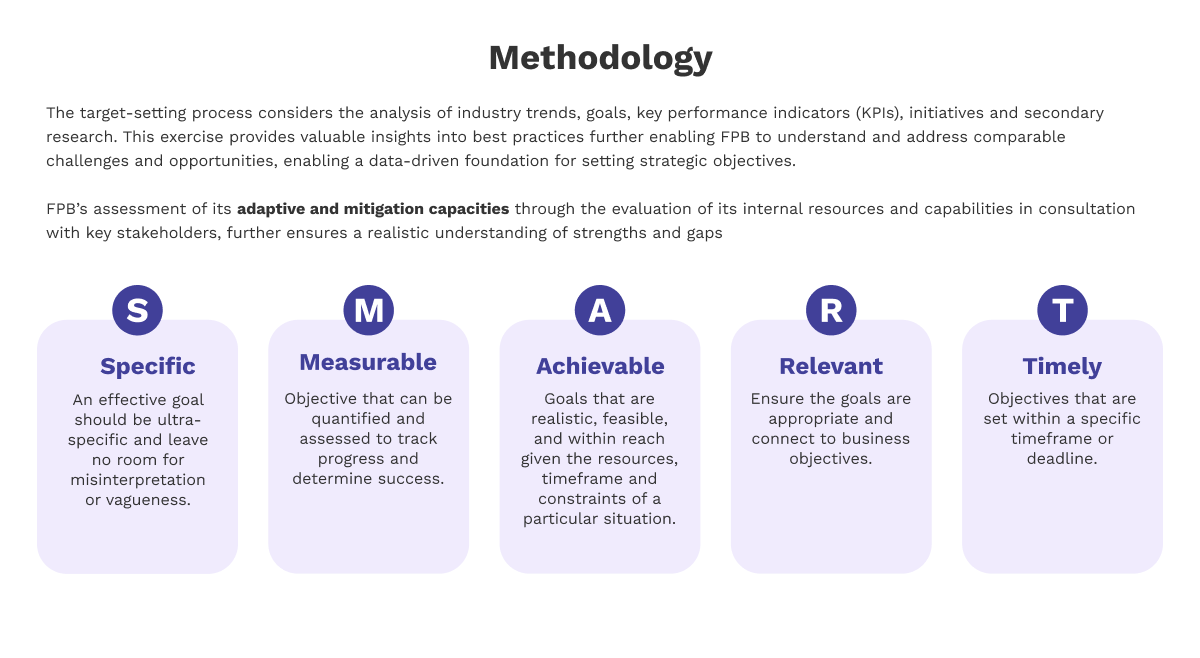
Target Setting and Key Performance Indicators (KPIs)
Targets and KPIs play a crucial role in the ESG Strategy by enabling the quantification of ESG objectives through clear and measurable benchmarks that facilitate continuous tracking of progress.
ESG Action Plan
ESG Action Plan: The ESG Action Plan is formulated by incorporating insights from the materiality assessment, risk and opportunity assessment, and established targets and KPIs. It includes defined timelines and clearly allocated roles and responsibilities, authorised by relevant stakeholders to ensure accountability and effective execution. Establishing Baselines and Monitoring Frameworks: Baseline data identified for each KPI, serves as a reference point to monitor progress. A comprehensive monitoring framework systematically tracks performance, ensuring alignment with the organisation’s strategic ESG objectives and commitments.